

Industries · Food, Restaurants & Catering
Food, Restaurants & Catering Industry
The food and restaurant industry is one of the most in-demand industries, tied to both Iran’s domestic economy and its non-oil exports.
Industry Overview
Why Abtin Financial Advisors Group?
The food and restaurant industry is one of the most in-demand industries and is linked to both the domestic economy and Iran’s non-oil exports. Beyond meeting domestic needs, it plays an important role in national branding, tourism and the export of processed products. Currency volatility, rising raw material costs and changing consumer tastes are its main challenges.
View All IndustriesVision
To become a global reference in corporate governance, assurance and risk management advisory
Mission
To create long-term value for clients, shareholders and society through effective corporate governance systems
Challenges
Challenges of the Food, Restaurants and Catering Industry
Intense domestic competition and weak international branding
Lack of a transparent financial structure in many small and medium-sized businesses
Rising logistics and packaging costs
Dependence on imports of certain raw materials (oils, additives)
Growth · Resilience
Iran’s Food Industry at the Crossroads of Growth and Resilience
Iran’s food, restaurant and catering industry is one of the country’s most vital and in-demand industries, dependent on both the domestic economy and non-oil exports. Beyond meeting people’s everyday needs, it plays an important role in national branding, tourism and the growth of processed-food exports.
However, economic pressures, currency volatility, rising raw material costs and changing consumer tastes mean that growth without financial management, operational optimization and smart use of technology creates high risk for businesses.
In this environment, local financial instruments, digitalization, AI and supply chain optimization are not a luxury but requirements for the industry’s survival and resilience.


Opportunities
Opportunities and Potential Advantages
Large domestic market and stable demand
Gradual growth without relying solely on exports.
Regional and international exports
Iraq, Afghanistan, Central Asia and neighboring countries.
AI and digitalization
Lower costs, demand forecasting, menu design and inventory management.
Growing B2B revenue
Corporate catering, hotels, airports and institutional food services.
Geopolitical advantage and skilled workforce
The potential to turn Iran into a regional food and catering hub once restrictions are lifted.
Case Study
Local Case Study
An Iranian food chain, by analyzing consumer data and issuing commodity forward (salaf) securities, was able to:
- Cut raw material waste by 18%
- Improve its liquidity and plan for the medium term
- Optimize part of its distribution fleet and catering services
18%This example shows that even under constraints, smart and realistic solutions can have a strong impact.
Transformation Paths
Solutions and Transformation Paths
01
Realistic, targeted AI
- Predictive maintenance for production-line equipment and industrial kitchens.
- Forecasting cash flow, costs and market demand.
- Data-driven menu design, dynamic pricing and inventory management.
02
Digitalizing operations and supply chain management
- Implementing ERP, demand forecasting systems and logistics optimization.
- Reducing raw material waste and increasing productivity.
03
Focusing on optimization instead of aggressive growth
- Optimizing raw material supply routes and warehousing.
- Increasing workforce productivity and reducing operating costs.
04
Developing ancillary revenue and B2B services
- Corporate catering, hotel services, training and technical support.
- Joint ventures and partnerships with regional players to increase capacity and quality.
Cost & Process Control
The Importance of Controlling Raw Materials, Costs and Process Orientation in Food and Catering
In the food, restaurant and catering industry, raw material costs and precise recipe management play a vital role in financial and operational sustainability. Price volatility, supply constraints and competitive pressure make precise control of usage and costs not an option but a strategic necessity.

01
Portion control
Controlling the amount of raw material used in each serving or product brings savings and less waste, with the following benefits:
- Less waste and more efficient use of raw materials
- Consistent quality, taste and appearance
- Lower operating costs and higher margins
- Accurate planning of purchasing and inventory
In Iran, with volatile raw material prices and limited access to import markets, portion control has become a vital tool for managing financial and operational risk.
02
Recipe costing and precise full-cost analysis
Determining the exact cost of each recipe allows businesses to price correctly, optimize ingredients and plan for profitability. The benefits of this approach include:
- Transparency in costs and real profit margins
- Scenario analysis for changes in ingredients or prices
- Fewer arbitrary decisions and stronger financial discipline
- Comparing the performance of branches and units
In Iran, recipe costing, especially in chain restaurants and industrial caterers, can reduce the risk of rising costs and currency volatility.
03
Cost optimization and supply chain management
Precisely determining material usage and full cost allows costs to be managed smartly and purposefully. Combined with digital tools and ERP software, it enables real-time inventory control, forecasting of material needs and less waste.
04
Process-oriented operations
A key principle in the success of restaurants and caterers is process-oriented operations: every stage of production, from receiving raw materials to serving the final product, is carried out in a systematic, standardized and measurable way:
- Every recipe becomes a standard process
- Training staff and reducing errors becomes easier
- Quality control and product consistency improve
- Production time and cost are optimized
Together with material control and recipe costing, this approach gives businesses sustainable, scalable and repeatable operations, even with limited resources and Iran’s market volatility.
Revenue Control
The Importance of Revenue Control and a Systematic Financial Cycle in Chain Restaurants and Caterers

In the restaurant and catering industry, especially in Iran’s large multi-branch chains, precise revenue control and a systematic financial cycle are vital principles for sustainability and growth. Accurate transaction recording, liquidity management and financial transparency are not only audit tools but strategic tools for fast decision-making and lower financial risk.
01
Recording revenue data on a dedicated platform
Using digital financial platforms and POS systems connected to central accounting, all daily transactions, including cash, card, online and cash-on-delivery sales, are recorded and processed in real time:
- Full revenue transparency across all branches and units
- Fewer human errors and manual entry mistakes
- Detailed analysis of sales, customer segments and best-selling products
- Easier internal reporting and reporting to regulators
02
Systematizing the revenue and liquidity cycle
By designing an integrated financial cycle, chain restaurants can standardize cash inflow, revenue recording, cost allocation and liquidity management:
- Automatic recording of sales and reconciliation with cash and card balances
- Cost control and automatic invoicing
- Coordination with purchasing and warehousing to control raw materials and reduce waste
- Finance managers’ access to real, real-time data for decision-making
This systematic cycle delivers lower financial risk, better cash flow and higher operational productivity on an ongoing basis.
03
The role of cashiers and finance productivity
The platform is designed so that cashiers/operators can record transactions quickly and in a standard way, and central finance can:
- Monitor transactions in real time
- Quickly identify revenue discrepancies
- Produce analytical reports for branch and head-office managers
- Share data with the ERP or supply chain management system
This model increases workforce efficiency and minimizes the time needed for financial controls.
04
Key benefits of financial systematization and digital recording in this industry
Transparent, reliable dataManagers can make strategic decisions with full confidence.
Real-time cost and revenue controlEnables a fast response to fluctuations in sales or raw materials.
Faster audits and reportingWithout time-consuming manual processes.
Preventing abuse and reducing financial fraudAutomatic recording of transactions and reconciliation with inventories.
Data analysis and revenue trend forecastingBy connecting to BI tools and AI.
Regional Hub
Outlook: Iran as a Regional Food and Catering Hub
With sanctions lifted and greater access to international standards and capital:
- Iran can become a regional hub for production, distribution, catering and B2B food services.
- A large and diverse domestic market enables sustainable growth and reduces the risk of relying solely on exports.
- Skilled human capital and competitive costs give Iran an advantage in attracting JVs and regional partnerships.
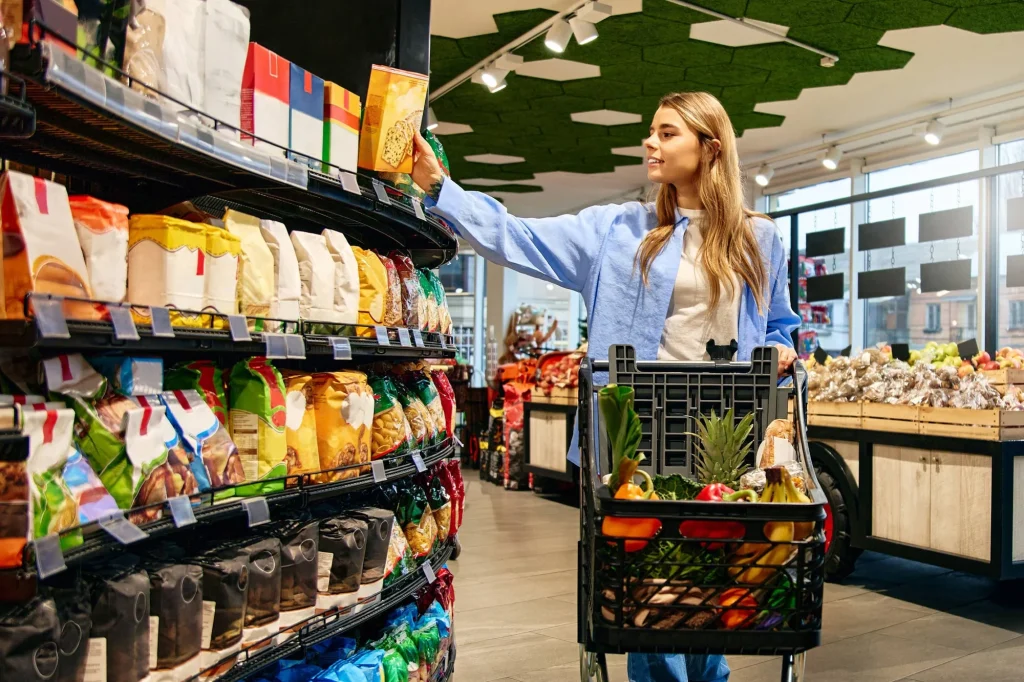
Iran’s food, restaurant and catering industry is in a situation where resilience, financial management and operational optimization come before aggressive growth.
Businesses that act realistically, use targeted financial tools and technology, and pursue smart partnerships have a better chance of survival, growth and lasting competitive advantage.
Abtin’s Role
The Role of Abtin Financial Advisors Group in the Food, Restaurant and Catering Industry
With a hybrid, localized and realistic approach, Abtin acts as management’s thinking and operational partner, delivering its services in light of the constraints and opportunities of the Iranian market:
Designing and deploying supply chain financing instruments: including commodity forward securities, futures contracts and food investment funds, to provide liquidity and renew businesses’ working capital.
Advising on brand expansion and entry into the capital market: guidance on increasing domestic market share and expanding exports to neighboring and regional countries, along with strategic partnerships (JVs) in production, catering and chain restaurants.
Implementing AI and data analytics systems: including demand forecasting, inventory control, recipe optimization, reducing raw material waste and increasing operational productivity.
Financial systematization and internal audit: digital recording of transactions, revenue control, reducing fraud and waste of resources, and providing reliable information for fast and accurate financial decisions.
Training and developing finance and operations teams: empowering restaurant and catering staff in liquidity management, cost analysis and sustainable planning for growth and scalability.
Optimizing the operational and financial cycle: integrating systems with ERP, digital platforms and analytics tools to increase profitability, reduce risk and improve overall business productivity.
The result of this approach
This comprehensive approach enables financial sustainability, operational optimization and smart growth in Iran’s chain restaurants and industrial caterers, and prepares them to compete in domestic and regional markets.
Smart Procurement
The Importance of Optimal, High-Quality Procurement in the Food, Restaurant and Catering Industry
In restaurants and industrial catering, purchasing raw materials is not just an operational process but a strategic tool for optimizing profit and controlling costs. Various factors affect the quality and price of purchases and ultimately shape the organization’s financial performance:
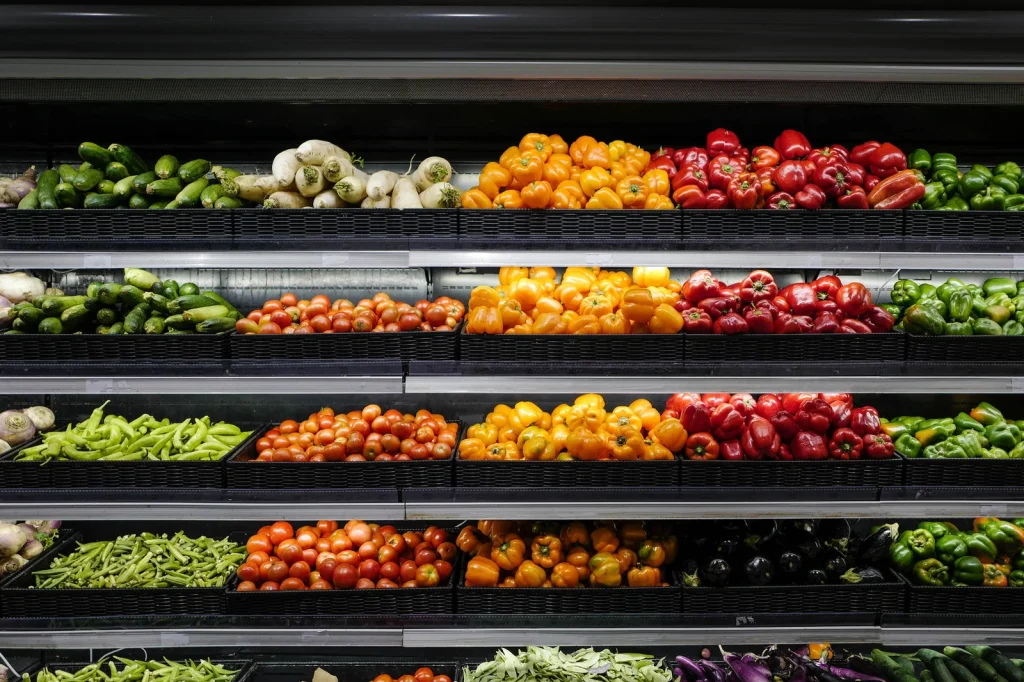
Direct relationships with main suppliers (direct sourcing)
- Buying directly from reputable producers or distributors cuts intermediary costs and lowers the cost of raw materials.
- Long-term contracts with reliable suppliers increase price stability and confidence in material quality.
Quality control and standardization of raw materials
- Buying cheap without regard to quality can lead to wasted materials, customer complaints and lower consumer satisfaction.
- Using a quality control (QC) system and standard recipe criteria reduces operating costs and waste while maintaining product quality.
Purchase volume and economies of scale
- Buying in larger volumes and consolidating orders can lower the unit cost of raw materials and strengthen the organization’s bargaining power in the market.
- For chain restaurants and large caterers, this directly affects profit margins.
Accurate demand forecasting and inventory optimization
- Using sales data, AI and ERP systems to forecast consumption reduces overbuying and shortages.
- Less spoilage and waste eases pressure on cash flow and improves return on capital.
Balancing price and quality for sustainable profit
- Buying purely on price can increase indirect costs (waste, equipment repairs, customer dissatisfaction).
- Buying good quality at the right price maintains product standards, increases customer satisfaction and loyalty, and supports long-term profit.
20–30%
In a restaurant or catering business, strategic purchasing decisions, including choice of main supplier, quality control, purchase volume and accurate demand forecasting, can directly affect operating margins and waste costs by up to 20–30%. In Iran, given currency volatility and supply constraints, smart procurement has become a vital factor for financial survival and sustainable growth.
Conclusion
Conclusion
In Iran’s chain restaurants and industrial caterers, revenue control, raw material cost management and a systematic financial cycle, with transactions recorded digitally by cashiers, are the backbone of financial and operational sustainability.
This approach makes it possible to:
- Optimize cash flow and provide real-time access to financial information.
- Make financial and operational decisions that are fast, accurate and data-driven.
- Reduce financial risk, waste of resources and human error.
- Enable scalability and sustainable business growth.
Integrating this system with AI, data analytics, ERP and demand and consumption forecasting tools turns it into a strategic tool for:
- Higher profitability and operational productivity
- Less raw material waste and optimized inventory
- Precise recipe analysis and optimization to maintain product quality and consistency
- Better efficiency and coordination of processes at every operational level
In addition, controlling material usage, precise recipe analysis and process-oriented operations form the foundation of financial and operational sustainability. Businesses that follow these principles will be able to:
- Reduce operating costs
- Guarantee product quality and consistency
- Increase their profitability and resilience in domestic and export markets
By combining these principles with AI, digitalization and ERP systems, organizations can secure sustainable growth, high productivity and successful competition in Iran and the region, and comprehensively optimize their financial and operational cycle.
Let's Talk